Industrial imaging
Purpose-oriented camera and illumination arrangements capture repeatable views of defined rolling-stock inspection zones.
LorGo MVIS combines industrial imaging, optical sensing, AI-assisted computer vision and inspection intelligence to transform rolling-stock examination into a repeatable, evidence-led digital workflow.
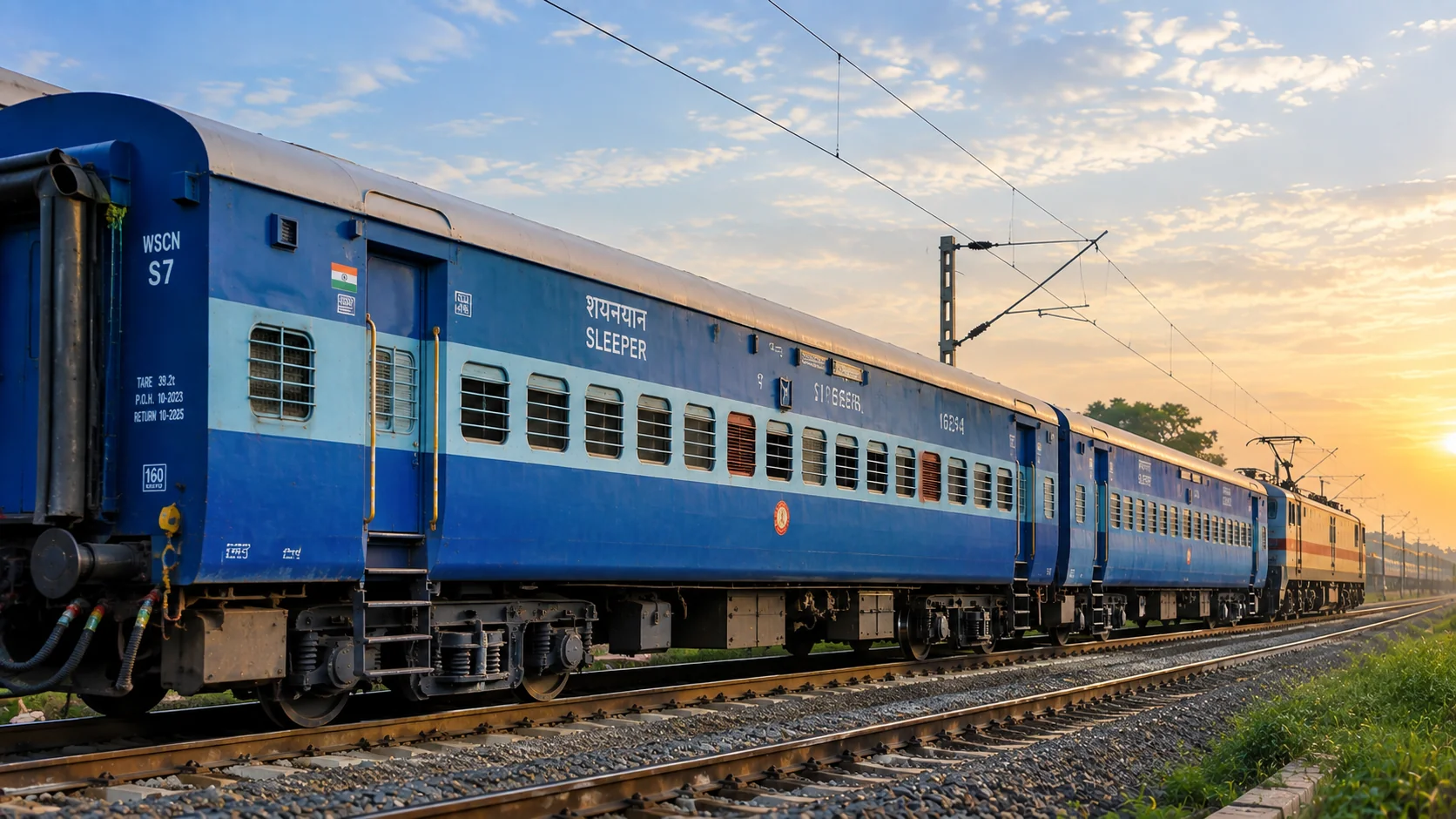
MVIS is designed to sit between the physical railway asset and the inspection workflow. It acquires visual and optical information, processes the data through configurable analytics and turns observations into reviewable inspection events.
Instead of treating an image as the final output, the platform is structured around the complete chain: capture, synchronize, analyse, classify, evidence, review and respond.
Purpose-oriented camera and illumination arrangements capture repeatable views of defined rolling-stock inspection zones.
Computer-vision models can be configured for selected components, defect classes and visual patterns.
Non-contact sensing can support load-profile and geometry-oriented inspection applications.
Findings can be connected with imagery, timestamps, asset context and review status for traceability.
Explore what MVIS can observe across wheel, bogie, underframe, body, coupler, brake and loading zones. Each inspection class can be configured around the project requirements and approved railway criteria.
Explore Inspection GuideAs a train passes through the engineered inspection environment, synchronized acquisition captures defined views. Software prepares the imagery, identifies relevant regions and applies configured analytics.
The output is a digital event that can be reviewed by authorized personnel. This creates a consistent foundation for inspection reporting, maintenance investigation and future analytics.
MVIS can support different railway inspection problems without forcing every requirement into a single generic workflow.
Multi-view imaging and AI-assisted computer vision for systematic examination of configured rolling-stock regions, with highlighted findings and image-based evidence.
Explore applicationOptical sensing and visual analysis for identifying configured load-profile and distribution abnormalities across wagons, supporting verification before operational release.
Explore applicationInspection logic can be configured around the components, zones and condition classes that matter to the project. The examples below describe inspection targets, not blanket performance claims.
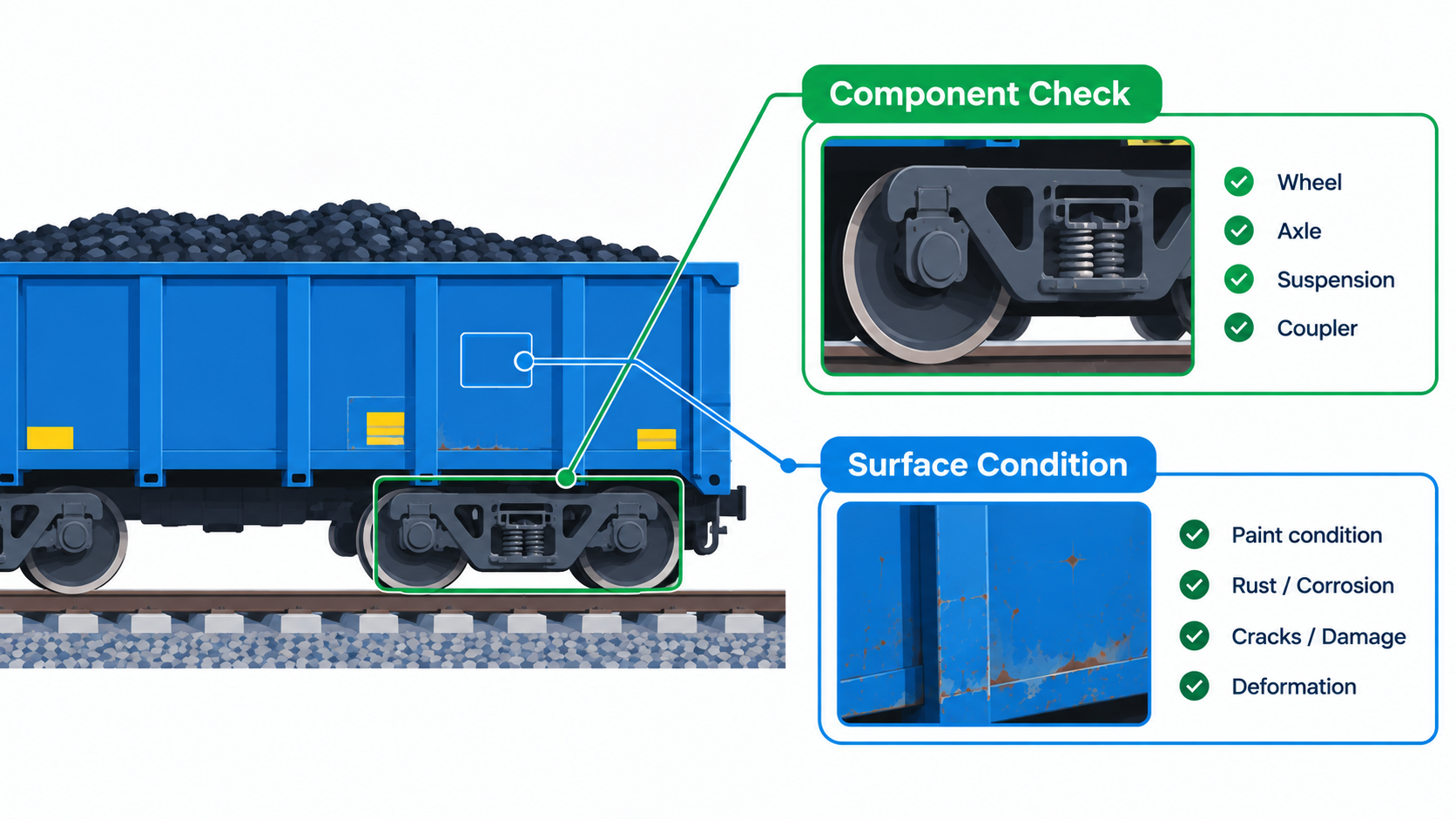 ROLLING STOCK
Configured vision models can highlight visual indications around wheels, bogies, underframe areas, body fittings and other defined inspection zones.
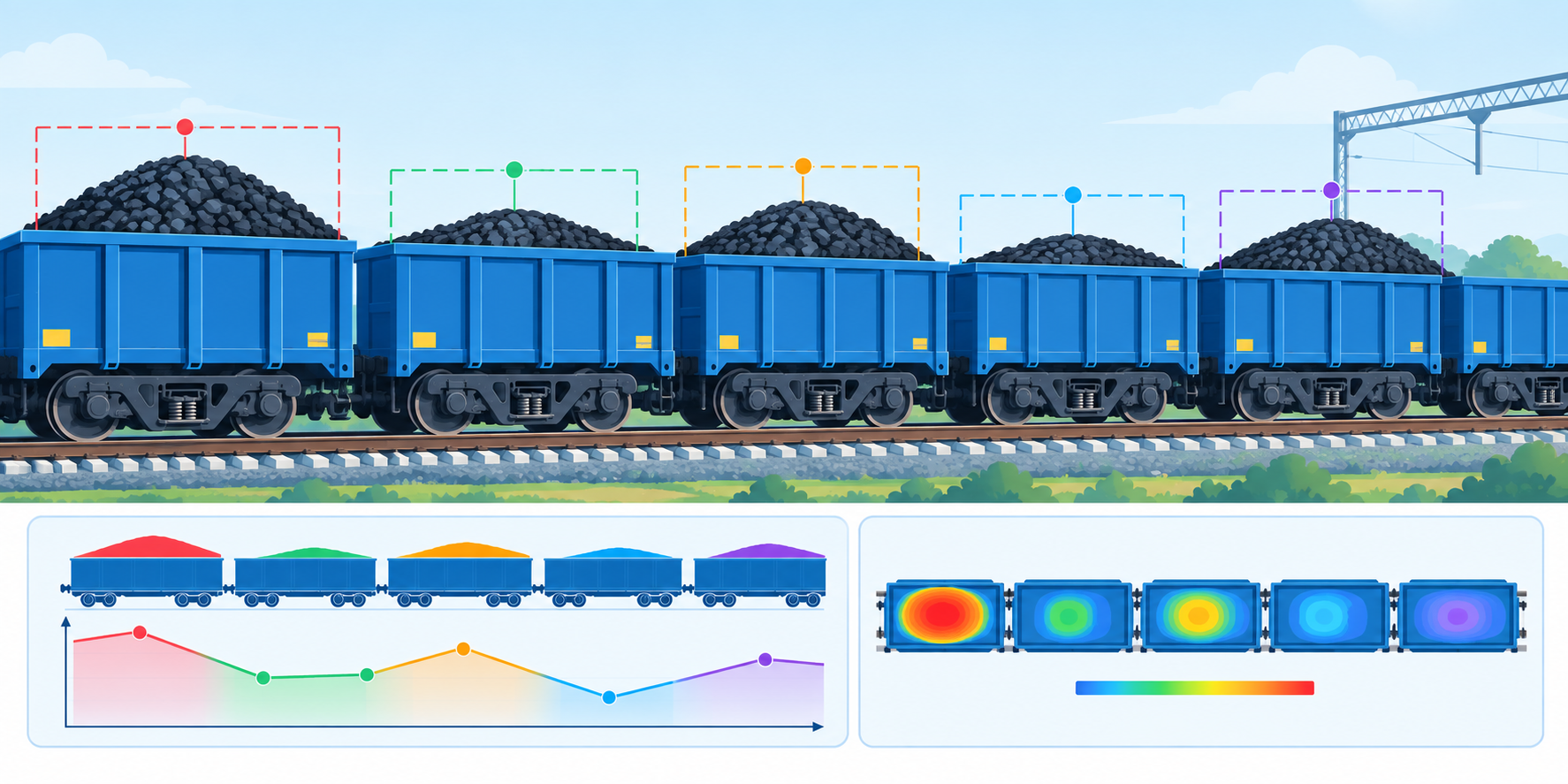 LOAD BALANCE
Optical sensing and image analysis can be configured to identify loading patterns that require verification before the wagon continues through the operational process.
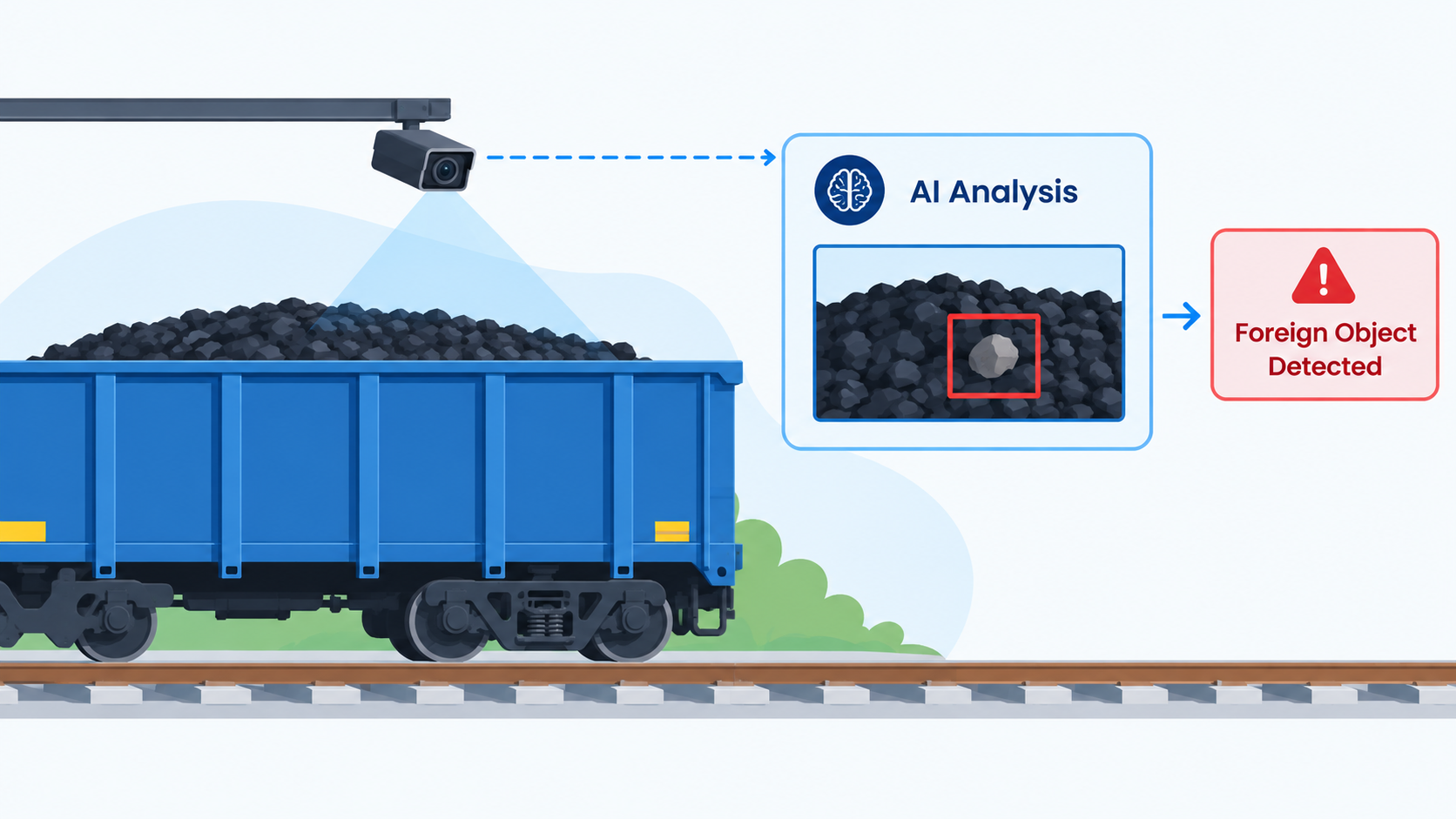 AI ANALYTICS
Models can classify configured visual patterns and connect the result to the source imagery, asset context and inspection event.
MVIS treats hardware, analytics and evidence as one engineered workflow. Individual deployments can be adapted to the available site conditions, sensing channels and integration requirements.
Moving train / wagon enters the inspection environment.
Cameras and optical sensors acquire synchronized inspection data.
Image processing and configured AI logic evaluate relevant regions.
Findings are linked to imagery, timestamps and asset context.
Authorized personnel review findings and take the applicable action.
The value of MVIS comes from creating a repeatable information pipeline that helps inspection teams find, verify, document and learn from conditions across rolling stock.
Repeatable acquisition reduces dependence on changing viewing conditions and supports standardized inspection coverage.
Inspection events can retain the evidence and context needed for later review, investigation and reporting.
New inspection zones, cameras, models and analytics can be introduced as the project evolves.
AI findings remain reviewable so authorized personnel can validate observations before action.
Discuss inspection zones, defect classes, sensing requirements, integration options and deployment architecture with the MVIS team.